
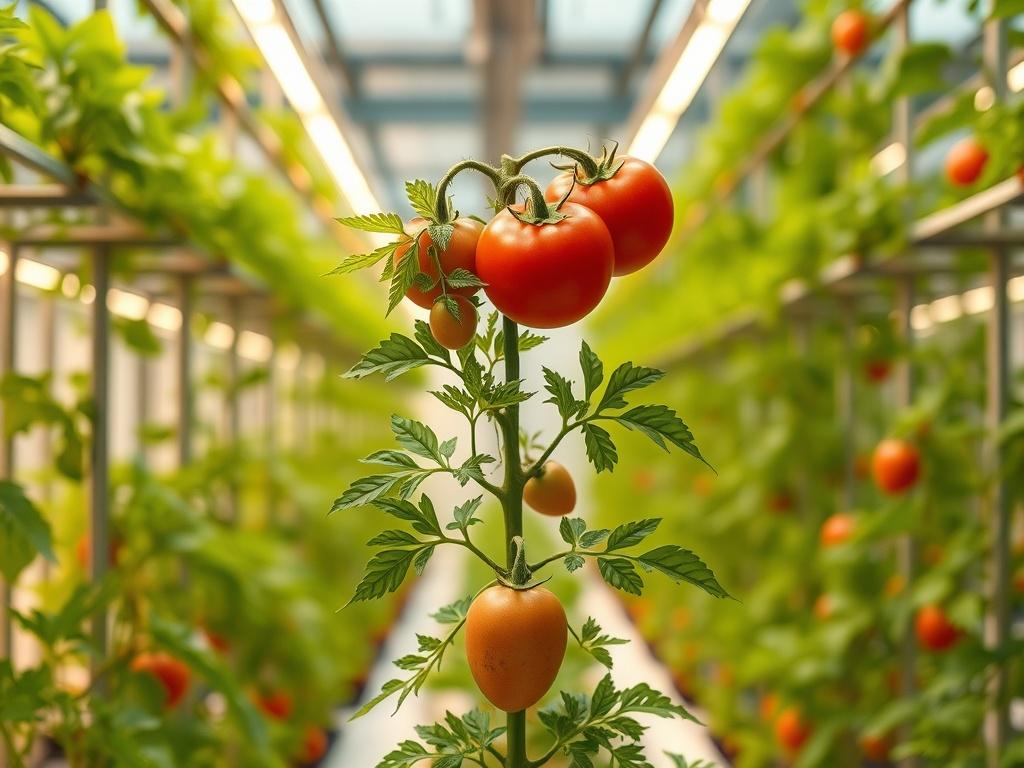
Welcome to the world of vertical farming, an innovative approach that transforms urban spaces into lush, efficient food-producing ecosystems. As traditional farming faces challenges such as climate change, limited land, and an increasing global population, vertical farming emerges as a sustainable solution. By utilizing stacked layers of crops and advanced technologies like hydroponics and aeroponics, this method not only maximizes space but also significantly reduces water usage and environmental impact.
In this post, we'll explore the intricacies of vertical farming, from its fundamental components to its groundbreaking techniques. Additionally, we'll delve into a fascinating example—the tomato-potato plant—showcasing how vertical farming can yield diverse crops in an urban setting. Join us as we uncover how this cutting-edge agricultural practice is reshaping our approach to food production and paving the way for a more sustainable future.
Understanding vertical farming: An innovative approach to modern agriculture
Vertical farming represents a groundbreaking shift in how we think about food production. By utilizing vertical space, this method enables farmers to grow crops in stacked layers, often within controlled environments like skyscrapers or shipping containers. This innovation not only maximizes space but also significantly reduces the amount of water and land required for traditional farming. As the global population continues to rise, vertical farming offers a sustainable solution to meet the growing demand for food while minimizing environmental impact.
Additionally, vertical farming integrates advanced technologies such as hydroponics, aeroponics, and LED lighting to optimize crop growth. These methods allow for year-round production, making it possible to cultivate a variety of crops regardless of climate conditions. With vertical farming, urban areas can become self-sufficient in food production, reducing transportation costs and carbon emissions associated with conventional agriculture. As we explore the potential of vertical farming, we can see how it could revolutionize the way we grow and consume food, setting the stage for a more sustainable future.
How vertical farming works: The essential components and techniques
Vertical farming utilizes a variety of innovative techniques and technologies to maximize crop yield while minimizing land use. This approach typically employs controlled environment agriculture (CEA), where factors such as temperature, humidity, and light conditions are carefully monitored and adjusted. Hydroponics, aeroponics, and aquaponics are common methods used in vertical farms, allowing plants to grow without traditional soil, thereby enhancing efficiency and reducing water consumption. By stacking layers of crops vertically, farmers can take full advantage of limited space, making it possible to grow a substantial amount of produce within urban environments.
To further streamline production, vertical farms often integrate advanced technologies like LED lighting and climate control systems. LEDs are especially beneficial because they can provide specific wavelengths of light that enhance plant growth while consuming less energy. Additionally, automation plays a crucial role in vertical farming; robotic systems can manage planting, harvesting, and packaging processes, thereby increasing efficiency and reducing labor costs. By harnessing these components and techniques, vertical farming not only addresses food scarcity but also contributes to sustainable agricultural practices.
Growing a tomato-potato plant: A fascinating example of vertical farming in action
The tomato-potato plant, known scientifically as Solanum tuberosum x Solanum lycopersicum, exemplifies the remarkable potential of vertical farming. This innovative hybrid plant combines the best of both worlds, producing tomatoes above ground while generating potatoes beneath the soil. In a vertical farming setup, this unique organism can thrive in a controlled environment where factors such as light, temperature, and humidity are optimized for growth. By utilizing hydroponic systems, growers can supply the ideal nutrients directly to the roots, maximizing yield and minimizing water usage—a key benefit of vertical farming.
In this innovative farming method, the tomato-potato plant can be cultivated in stacked layers, allowing for a high-density planting approach. The setup not only saves space but also enhances accessibility for maintenance and harvesting. Vertical farming systems often integrate advanced technologies, such as LED grow lights and automated nutrient delivery systems, to ensure the plants receive everything they need for optimal growth. By growing a tomato-potato plant in a vertical farm, growers can enjoy a sustainable source of food while contributing to the conservation of land and resources, making this an exciting example of how vertical farming can revolutionize agriculture.